Ergonomic Carry Handles for Cartons Improve Safety and Grip
A carry handle for cartons is a pre-attached or integrated gripping component, typically made of plastic or reinforced paper, that allows users to lift and transport a loaded box without relying on the container’s side walls. By distributing the weight of the contents through a secure central anchor point, this design significantly reduces the risk of tearing or collapsing the carton under stress. These handles are easy to grasp, enabling a stable one-handed carry that improves ergonomics and prevents strain during repeated use.
Why Box Handles Matter for Logistics and Usability
A carry handle for cartons directly transforms logistics efficiency by eliminating the need for secondary lifting tools. Without it, workers must awkwardly grip box edges, increasing spill risk and slowing movement. A well-placed handle allows one-handed carry, accelerating loading and unloading while reducing worker fatigue. For usability, it provides a stable, balanced grip, preventing the box from tilting or dropping. This means fewer damaged goods and safer handling in tight warehouse aisles or during last-mile delivery. The cutout itself must be sized for gloved hands and placed to avoid tearing. Ultimately, a proper carry handle for cartons converts a simple container into an ergonomic tool, boosting both throughput and end-user satisfaction.
Reducing injury risk during manual lifting and transport
Manual lifting and transport of cartons without handles forces workers to adopt dangerous claw grips, increasing strain on wrist tendons and lower back muscles. A properly designed carry handle for cartons allows a neutral wrist posture and a power grip, distributing the load evenly across the hand and arm. This reduces the compressive force on spinal discs by keeping the payload closer to the body’s center of gravity. Even a single ergonomic handle can lower peak hand-force by over 30% compared to pinch gripping the box flaps. By eliminating awkward twisting and sudden torque reactions during movement, handles directly mitigate the primary biomechanical triggers for acute strains and cumulative trauma disorders.
- Allows a neutral wrist position, preventing radial/ulnar deviation injuries.
- Distributes load across the palm instead of pinching with fingertips.
- Reduces required trunk flexion by enabling a closer lifting arc.
- Minimizes sudden torque spikes when the box shifts during transport.
How ergonomic access points improve warehouse efficiency
Ergonomic access points in carton handles directly reduce worker fatigue by enabling natural grip postures during retrieval and transport. This design allows faster pick cycles as employees avoid awkward lifts, maintaining consistent throughput. Optimized handle ergonomics minimize injury risk, which cuts downtime from strain-related absences. The logical flow of movement from shelf to pallet is smoother when hands can enter and exit the handle without resistance.
- Reduces wrist bending, allowing quicker box rotation during stacking
- Enables two-handed carrying for balanced loads, increasing per-trip volume
- Eliminates handle-to-shelf friction, speeding up stock replenishment
Each second saved on grip adjustment compounds across thousands of daily handlings into measurable labor savings.
Anatomy of a Carton Grip: Key Design Elements
The anatomy of a carton grip relies on precise design elements to transform a flat cardboard panel into a reliable carry handle. A primary feature is the die-cut aperture, where the inner finger hole must be curved and debossed with rolled edges to prevent paper cuts and allow four fingers to nest securely. The surrounding reinforced bridge uses double-layered cardboard or glued flaps to distribute weight from the product load into the adjacent sidewalls, preventing tear-out. A tactile feedback notch, often a small crescent indentation just above the aperture, guides the thumb into a natural hook position. I recall a shipment of 24-packs of canned tomatoes; without a deep, reinforced bridge and smooth beveled edges on the grip hole, the handles sliced into shoppers’ knuckles within steps from the store shelf.
Material choices for the handle strip: plastic vs. paper-based
The handle strip’s material directly dictates its performance and user experience. Plastic strips, typically polypropylene, offer superior tensile strength and resistance to moisture, making them reliable for heavy loads and cold-chain logistics. Paper-based strips, often kraft or reinforced cardboard, provide a biodegradable option but are prone to tearing under high humidity or sharp weight shifts. For lighter, dry goods, paper can suffice, though its rigidity may cause hand discomfort. Plastic handle strips outperform paper-based equivalents in load-bearing capacity, yet paper excels in eco-conscious contexts where single-use disposal is prioritized.
Q: When should I choose paper over plastic for a handle strip?
A: Choose paper only for lightweight, dry cartons where sustainability is paramount, and avoid it for heavy, damp, or long-distance shipments where plastic’s durability is essential.
Cutout geometry and its effect on hand comfort
The geometry of the carton cutout directly determines hand comfort by controlling pressure distribution and shear stress during carrying. A cutout with sharp corners or insufficient radius concentrates force into the palm’s soft tissue, causing discomfort; in contrast, a broad, rounded shape with a curved finger channel for carton ergonomics distributes load across a wider contact area. To optimize comfort, follow this sequenced logic:
- Increase the cutout’s edge radius to reduce localized pressure points and prevent finger fatigue.
- Widen the aperture so the hand does not wedge tightly, minimizing lateral compression and shear on the skin.
- Add a subtle bevel or chamfer along the cutout’s interior edge to eliminate sharp transitions that dig into the fingers.
Each geometric adjustment reduces stress on the hand’s supportive structures, making prolonged carrying tolerable.
Reinforcement layers that prevent tearing
Reinforcement layers are your carton handle’s secret weapon against frustrating rips. These extra plies of cardboard, often glued around the cutout, spread the handle’s load across a wider area. This prevents the thin edge from digging in and tearing under the weight of heavy contents. Integrated tear-resistant reinforcements work best when aligned with the carton’s corrugation flutes, providing strength exactly where stress concentrates. Without them, even a perfectly shaped handle can fail halfway through the trip home.
Why do some reinforced handle holes still tear? It’s usually because the reinforcement patch wasn’t bonded securely to the main panel, or the material’s grain direction runs the wrong way, creating a weak point along the fold or cut edge.
Common Types of Box Carrying Aids
Plastic clip-on handles are a common box carrying aid that snaps onto carton flaps, distributing weight across the palm. Adhesive-backed handles stick directly to the box surface for a secure grip. For heavier loads, pre-cut hand holes in corrugated cartons serve as integrated handles. Strap-style handles wrap around the box and offer a cushioned carry. A common question is: How does the grip differ between clip-on and adhesive handles? Clip-ons rely on flap strength, while adhesive handles bond to the carton’s exterior for broader load support.
Punch-out die-cut handholes in corrugated fiberboard
Punch-out die-cut handholes in corrugated fiberboard are a common carrying aid formed by partially cutting a flap directly into the carton’s side panel. These handholes rely on the board’s inherent rigidity; a user pushes the die-cut tab inward to create an opening. They offer an integrated, low-cost solution without separate materials, though comfort is limited by the raw board edge. Do punch-out handholes weaken carton stacking strength? Yes, cutting through the flute structure reduces vertical compression resistance by roughly 15–30%, so they are best suited for lightweight loads where structural compromise is acceptable.
Adhesive-mounted handles for aftermarket installation
Adhesive-mounted handles for aftermarket installation offer a retrofit solution for awkwardly balanced cartons lacking integrated grips. These peel-and-stick handles, often reinforced with flexible plastic or foam cores, adhere directly to clean box surfaces via high-bond acrylic tape. They instantly transform a slippery, unmanageable load into a secure carry point, redistributing weight without requiring tape or twine. Ideal for odd-shaped or single-use cartons, they let you add a handle exactly where balance demands—on the side for sprawling packages or centered for heavy items.
Adhesive-mounted handles for aftermarket installation: peel off the liner, press onto any clean carton surface, and gain an instant, custom-positioned carry point.
Integrated strap-style grips for heavy-duty packaging
For heavy-duty packaging, integrated strap-style grips offer a built-in, reinforced solution. Molded directly into the corrugated board or plastic crate, these straps distribute weight across your hand, preventing dig marks on larger boxes. They usually span the full width of the carton, allowing for a balanced carry even with dense contents. Because the strap is part of the box rather than a separate add-on, it helps maintain stackability and won’t snag during transport. Simply slip your hand through the opening to lift.
Integrated strap-style grips are a built-in, balanced lifting solution for heavy cartons, spreading weight across your palm to avoid discomfort and keep the box stackable.
Functional Benefits Beyond Simple Lifting
A carry handle for cartons transforms a simple box into a balanced load, allowing you to transfer weight through your arm’s skeletal structure rather than just your grip strength. This design reduces muscle strain on long walks across a warehouse, as the handle’s pivot point keeps the carton from swinging unpredictably. You can even carry two cartons at once by distributing the weight between your hands, effectively doubling your trip efficiency. This makes pulling a carton from a high shelf far safer, since you’re not fighting the box’s center of gravity while stretching. It’s less about raw power and more about how the handle lets your body work smarter, not harder.

Balancing heavy loads without shifting contents
When a carton carries a dense or unevenly distributed load, the handle’s geometry must prevent load shifting to maintain balance. A rigid, central mount on the handle transfers force directly to the carton’s core, minimizing pendulum effects that cause contents to slide. This load-stabilizing handle design relies on a wide base plate that spreads tension across the box walls, counteracting rotational torque from a heavy side. For liquids or granular materials, a low-friction handle surface allows the carton to tilt slightly without the contents cascading, preserving center-of-mass within the package boundaries during transit.
Enabling one-handed operation in retail displays
An integrated carry handle directly enables one-handed operation when stocking retail displays. A single hand can grip the handle for cartons, allowing the other to remain free for opening case flaps, removing price tags, or positioning product on a shelf. This eliminates the need to set down a box to use both hands, reducing motion waste. The handle’s design lets the carrier tilt and slide the carton into a display’s front row with a single wrist motion, keeping the load balanced and stable without a second hand for support.
A carry handle converts a two-handed lift into a single-handed operation, allowing the user to simultaneously maneuver the carton into a retail display while the other hand remains free for tasks like price labeling or product arrangement.
Reducing strain on the base of corrugated containers
A carry handle reduces strain on the base of corrugated containers by redistributing the load away from the bottom panel. Without a handle, lifting often concentrates force on the base, causing bulging, tearing, or failure. The handle transfers weight to the sidewalls and hand grip, preventing the base from bearing the full vertical pressure. This preserves container structural integrity during transport, minimizing sagging or burst seams that occur when unsupported bases are stressed. Properly integrated handles thus prolong carton usability and protect contents from contact with moisture or debris.
Strain on the base of corrugated containers is reduced by shifting lifting forces from the bottom to the handle, preventing base deformation and failure.
Industry-Specific Requirements for Handholes
In cartons with carry handles, industry-specific handhole requirements directly dictate user comfort and product safety. For heavy-duty e-commerce boxes, handholes must be reinforced with a die-cut flap or plastic insert to prevent tearing under weight. Grocery and beverage cartons often demand a curved, ergonomic cutout that fits gloved hands, while electronics packaging requires a sealed handhole to keep out dust and moisture.
Always match the handhole’s size and placement to the carton’s center of gravity—off-center slots cause tilting and spillage.
For retail display cartons, handholes must be hidden inside a perforated panel so the box looks seamless on the shelf but remains functional for transport. Each industry’s product weight, handling frequency, and environment decide if a simple oval or a reinforced, dual-handle design is the better fit.
E-commerce packaging: ensuring easy home delivery access
For e-commerce packaging, handholes must be positioned and sized to ensure easy home delivery access regardless of the carrier’s grip angle or glove thickness. A vertical slot cut near the box’s vertical center of gravity allows the delivery person to balance the parcel without tilting, preventing contents from shifting during single-hand curb-to-door transport. The aperture should accommodate a gloved hand up to 85mm wide while maintaining a minimum 20mm of carton board between the handhole edge and the box’s sidewall to prevent tearing under weight. This design ensures seamless retrieval from porches or apartment lobbies without secondary handling.
E-commerce packaging: ensuring easy home delivery access relies on strategically placed, glove-compatible handholes that maintain load balance and structural integrity during single-handed transport to the doorstep.
Food and beverage boxes: meeting hygiene and weight standards

For food and beverage boxes, handhole design must prioritize non-porous, smooth surfaces to prevent microbial accumulation, directly supporting hygiene standards. The aperture’s dimensions require precise calculation to accommodate gloved fingers without tearing the carton’s moisture-resistant lining. Weight distribution is critical: the handhole’s position must align with the box’s center of gravity to avoid strain on sealed seams when lifting filled units. Reinforced cutouts with rounded edges prevent fiber shedding into product zones. Using food-grade, hygiene-compliant handhole reinforcement ensures the cutout does not compromise the barrier against contaminants while sustaining the load of dense beverages or perishables.
Industrial bulk containers: load capacity and handle spacing
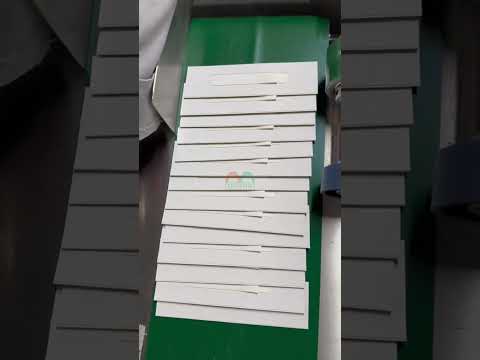
For industrial bulk containers, load capacity dictates the structural demands of handle spacing, as wider gaps between handles distribute heavy payloads more evenly across the container wall. A 1,500‑kg bin requires handle spans exceeding 600 mm to prevent stress fractures, while compact 500‑kg units operate safely with 400 mm spacing. Ergonomic synergy between load mass and handhole placement ensures operators can lift without excessive torsion. Bulk designs often pair elongated handholes with reinforced grip zones, matching spacing to the center of gravity for stable, dynamic handling.
- Wider handle spacing (600+ mm) prevents wall fatigue on heavy-duty 1,500‑kg bulk containers.
- Compact 500‑kg units balance stability with 400 mm handle gaps for maneuverability.
- Spacing must align with the container’s center of gravity to avoid tipping during lifting.
- Reinforced handle zones around handholes reduce stress at load capacity thresholds.
Testing Standards and Quality Benchmarks
The warehouse floor hummed as pallets stacked with bulk cartons awaited shipment, but the real stress test came when a picker grabbed a carry handle for cartons rated for thirty pounds yet loaded with forty. Quality benchmarks for this handle demand a static load test holding 1.5x the stated weight for 60 seconds without tearing from the carton board. In daily use, that handle also endures a drop test from four feet onto concrete—simulating carton box plastic handle a fumbled lift—where any crack or delamination fails the standard. Temperature cycling, from a frozen dock to a hot trailer, checks adhesive integrity at the handle’s anchor points. Passing these benchmarks means the handle won’t rip mid-carry, a silent assurance the QA team validates every batch.

Pull-test protocols for adhesive-bonded grips
Pull-test protocols for adhesive-bonded grips on carton handles quantify the peak peel and shear resistance of the bond line. A calibrated force gauge, set to a 90° or 180° peel angle, applies a controlled tensile load at 300 mm/min until failure. The recorded failure mode—adhesive, cohesive, or substrate tear—dictates process adjustments. Acceptable thresholds require a minimum load of 25 N per grip, verified across a sample of five cartons preconditioned at 23°C and 50% RH.
- Use a grip-specific jig to isolate the bonded area from carton flex.
- Reject any run where adhesive residue remains on the carton surface below 80% coverage.
- Record both instantaneous peak force and the sustained load over a 5-second dwell.
Weight distribution analysis for die-cut openings
Weight distribution analysis for die-cut openings evaluates how the handle aperture transfers load to the carton sidewall. The analysis maps stress gradients at the cut line to predict failure points. A standardized protocol follows:
- Measure the static load at handle centroid.
- Calculate shear stress per unit length along the die-cut perimeter.
- Compare peak stress to substrate yield strength.
Uneven distribution causes local buckling or tearing, guiding adjustments to opening geometry or reinforcement placement. Results directly inform the maximum acceptable fill weight before handle deformation occurs.
Durability under repeated use and extreme temperatures
For carry handles on cartons, thermal cycling fatigue resistance is critical. Repeated stretching and relaxation degrades polymers, while extreme heat causes embrittlement and cold snaps trigger fracture. Handles must survive 500+ flex cycles at 60°C and -20°C without tearing or delaminating from the board. Can a handle that fails after ten uses at freezing temperatures still pass a heat-aging benchmark? No—validated designs endure 72-hour oven exposure at 70°C followed by immediate cold-crack impacts, proving both brittle avoidance and elastic recovery under temperature extremes.
Optimizing Handle Placement for Different Box Sizes
Optimizing handle placement for different box sizes is critical for carry handle for cartons to ensure balance and safe lifting. For small, shallow cartons, a single centered handle near the top edge is sufficient, as weight distribution is minimal. Medium boxes benefit from a handle positioned roughly one-third from the top to align with the center of gravity when filled. For large or tall cartons, dual handles placed on opposing sides at a height equal to two-thirds of the box depth reduce strain and prevent tipping. The handle cutout must be sized proportionally—wider for larger boxes to accommodate gloved hands—while reinforced flaps prevent tearing under heavy loads. Always test a handle’s placement by simulating the load’s center of mass, shifting the cutout closer to the heavier side if needed to avoid uneven torque.
Centered vs. offset positioning for balanced carrying
For balanced carrying, centered handle positioning is optimal for evenly distributed loads, as it aligns the pivot point directly over the carton’s center of gravity. When the cargo is uniformly packed, a centered handle prevents tilting and requires minimal stabilizing effort. Offset positioning becomes essential for unbalanced contents, such as heavy items on one side. By shifting the handle away from the geometric center toward the heavier side, the carrier effectively counterbalances the load, reducing wrist strain and preventing the box from spinning during transport. The choice hinges on predictive load distribution.
| Aspect | Centered Positioning | Offset Positioning |
|---|---|---|
| Best for | Uniformly packed loads | Unbalanced or heavy-side contents |
| Carrying stability | Straight, minimal tilt | Compensates for uneven weight |
| User effort | Less stabilizing force needed | Requires counterbalance awareness |
Multiple handles for oversized or long cartons
For oversized or long cartons, a single central handle creates imbalanced weight distribution and excessive stress on the corrugated board. Distributing the load across multiple handles for oversized or long cartons—typically two or four points—reduces per-handle strain and prevents tearing during transit. Placement should prioritize ergonomic balance, aligning handles near the carton’s center of gravity or at third-point intervals to allow coordinated lifting by two people. Cut-out or tape-reinforced handles are often positioned symmetrically on long side panels to accommodate structural fluting direction.

Multiple handles reduce localized stress and enable safe two-person handling by distributing the weight across reinforced, symmetrically placed gripping points on long cartons.
Alignment with internal product weight distribution
For optimal stability, the handle must be positioned directly above the carton’s center of gravity, a principle known as internal product weight distribution alignment. If a box holds a heavy item on one side, the handle shifts accordingly to prevent tilting or tearing during lifting. This avoids uneven stress on the carton structure, ensuring the load remains balanced and comfortable to carry. Precisely mapping internal weights before cutting handle slots eliminates awkward swinging or localized strain, directly linking handle placement to the specific mass layout within each unique box.
Eco-Friendly Innovations in Grip Technology
Modern eco-friendly innovations in grip technology now transform the humble carry handle for cartons. You can find handles made from recycled cardboard fiber or bioplastics that still offer a secure, comfortable hold. Some designs replace plastic with die-cut paper loops that lock into the box, using friction-based grip without glue. Others incorporate textured, compostable coatings to prevent slipping, even when your hands are damp. These handles maintain strength while breaking down safely in recycling streams. The key is that you get the same reliable, ergonomic lift you expect, but with a materials footprint you can feel good about every time you grab a box.
Biodegradable handle inserts from recycled fibers
Biodegradable handle inserts from recycled fibers offer a practical, sustainable alternative for carton handles. These compostable inserts are engineered from post-consumer waste, providing the necessary rigidity for lifting heavy loads while breaking down naturally in industrial composting systems. Unlike plastic inserts, they integrate seamlessly into paperboard recycling streams, requiring no separation from the carton. The fibers are compressed into a dense, moisture-resistant form that maintains structural integrity during transport. This innovation ensures that the entire carton, including its zero-waste handle insert, can be disposed of as a single organic unit, eliminating plastic contamination from the recycling process.
Minimizing material waste with perforated cutout designs
Perforated cutout designs minimize material waste by allowing the handle to be stamped directly from the carton’s existing body, eliminating the need for separate plastic or tape components. This method removes excess material only where the hand grips, leaving the surrounding board intact for structural support. The precise geometry of the perforations ensures the cutout sections are small and efficiently nested, reducing scrap. This approach directly lessens raw material consumption per unit, making perforated cutout efficiency a core method for lowering the overall environmental footprint of carton packaging.
Reducing plastic use in reinforced handle patches
Reducing plastic in reinforced handle patches means swapping thick, solid plastic for lighter designs or recycled materials. Many patches now use thin, biodegradable composite layers with added fibers for strength, cutting plastic content by up to 40%. Some designs integrate the patch directly into cardboard flaps, eliminating separate plastic inserts entirely. Others punch precise stress-relief patterns into the patch, maintaining tear resistance while using less material. The result is a handle patch that stays durable during heavy loads but feels noticeably lighter and less wasteful when you toss the carton.

Comments are closed.